Uncategorized
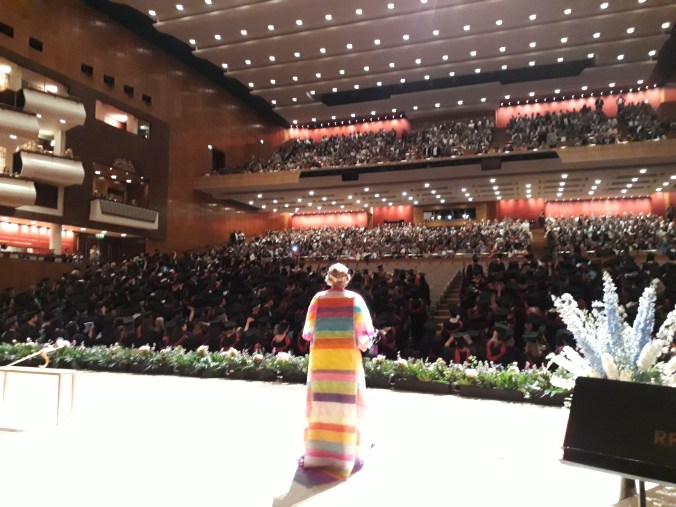
University of the Arts, London Teaching Awards 2017
I will just leave this here

Award ceremony to take place next week .
#DigitalSociology Twitter Network 2017

A pdf version is also available – digitalsociology
We are a @BritSoci study group
In spite of the increasing prominence of the Digital Humanities within the academic landscape, the form and practice which might come to be implied by the moniker ‘Digital Sociology’ remains strikingly inarticulate. While recent developments in computational social science and online research methods are certainly to be welcomed, it is our contention that the nascent ‘digital turn’ being witnessed in the academy has broader significance for the future of sociology than such specialisms can account for. Lupton (2012) identifies four major areas to the nascent field of digital sociology: professional use of digital tools by sociologists, sociological analyses of digital media use, sociological analysis of digital data and critical analysis of digital media and their attendant circuits of capital and power. Our proposed group would seek to represent each of these areas, drawing out the commonalities between them while taking care not to obliterate the differences. We hope to use the notion of ‘digital sociology’ as an umbrella term under which to bring what have too often been disparate and fragmented strands of research and practice concerning the ‘digital’ into a productive dialogue, orientated towards the novelty of our present circumstances but grounded in the longer standing intellectual traditions of sociology.
Aims of the Group
- To identify and disseminate best practice in the use of digital tools by sociologists.
- To develop and promote specifically sociological modes of inquiry into digital media use.
- To develop and promote specifically sociological responses to ‘big data’, in terms of both secondary analysis and the broader methodological questions posed by this transformation in the information systems of late capitalist society.
- To develop and promote specifically sociological analyses of the broader personal, cultural and structural changes involved in the digital turn within social life.
- To provide an open forum for exploration of what the digital turn entails for sociological practice, professional identity and the future of the discipline.
Contact the Convenors
Mark Carrigan
University of Warwick
Emma Head
Keele University
Huw Davies
University of Southampton
Or join the groups mailing list here…
https://www.jiscmail.ac.uk/cgi-bin/webadmin?A0=BSADIGITALSOCIOLOGY
IP Addresses and Virgin Trains East Coast
Click to Interact
The following attempt at collecting data within a digital environment is part inspired by reading Digital Sociology: The Reinvention of Social Research Noortje Marres.
My phone was not connected to Virgin Trains East Coast wifi during the entire trip.
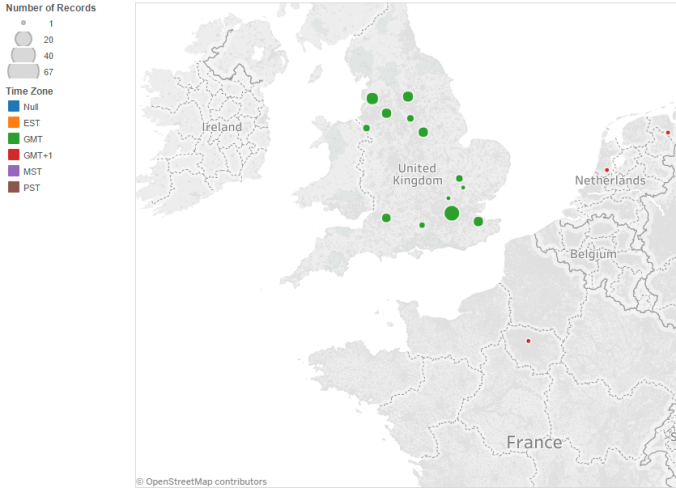
IP Addresses Collected on a Virgin East Coast Train – Using a freely available app on my Android phone I was able to collect this list of IP addresses – I am simply left with a lot of questions. Are they the IP addresses of the mobile devices of my fellow travellers or are they the IP addresses that my mobile phone was in connection with and exchanging my data with? Or both.
Brexit Tweets April 2017
Link to the interactive version
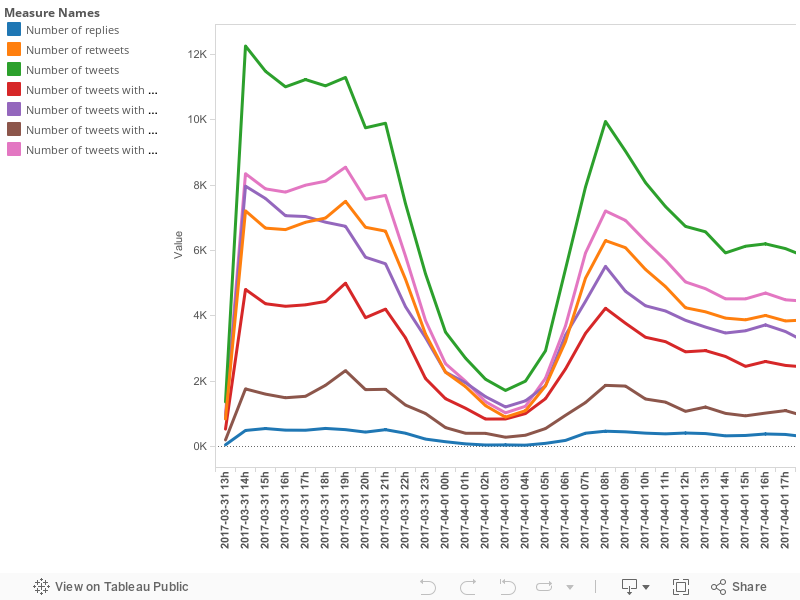
Brexit April 2017 Twitter data – from 17-03-31 13:53:00 – 17-04-10. The data set contains a total of 1,149,080 tweets and counting.
 'SOCIAL' NETWORK ANALYSIS OF THE MEDIA ECOLOGY